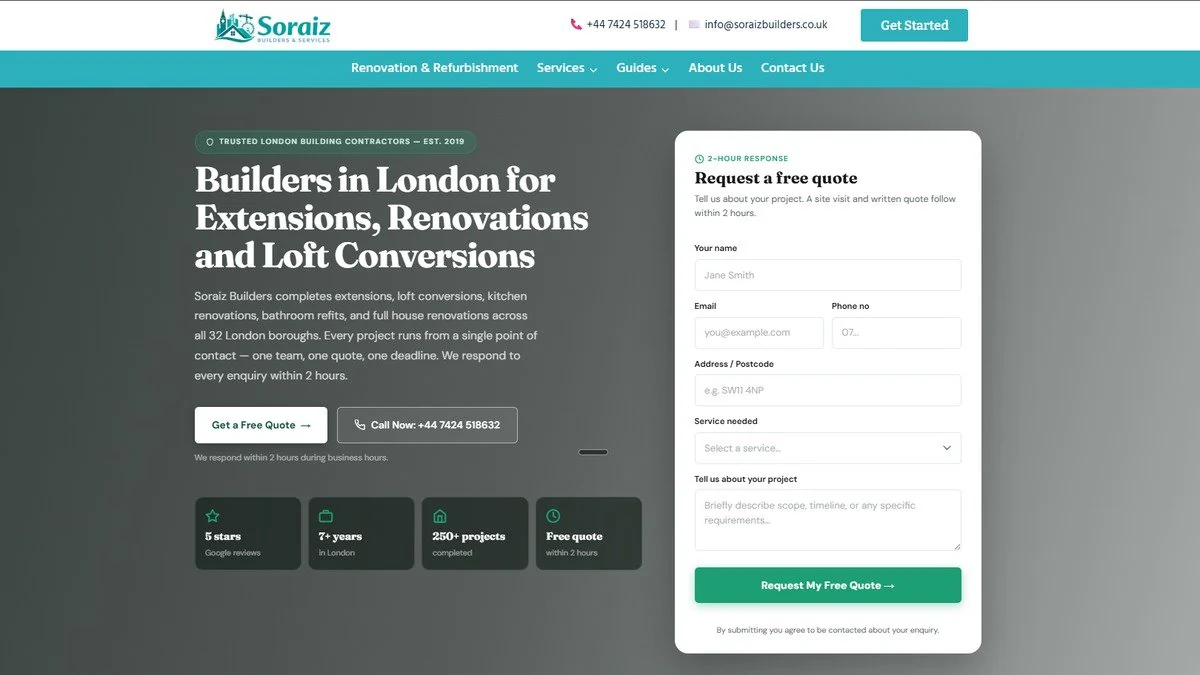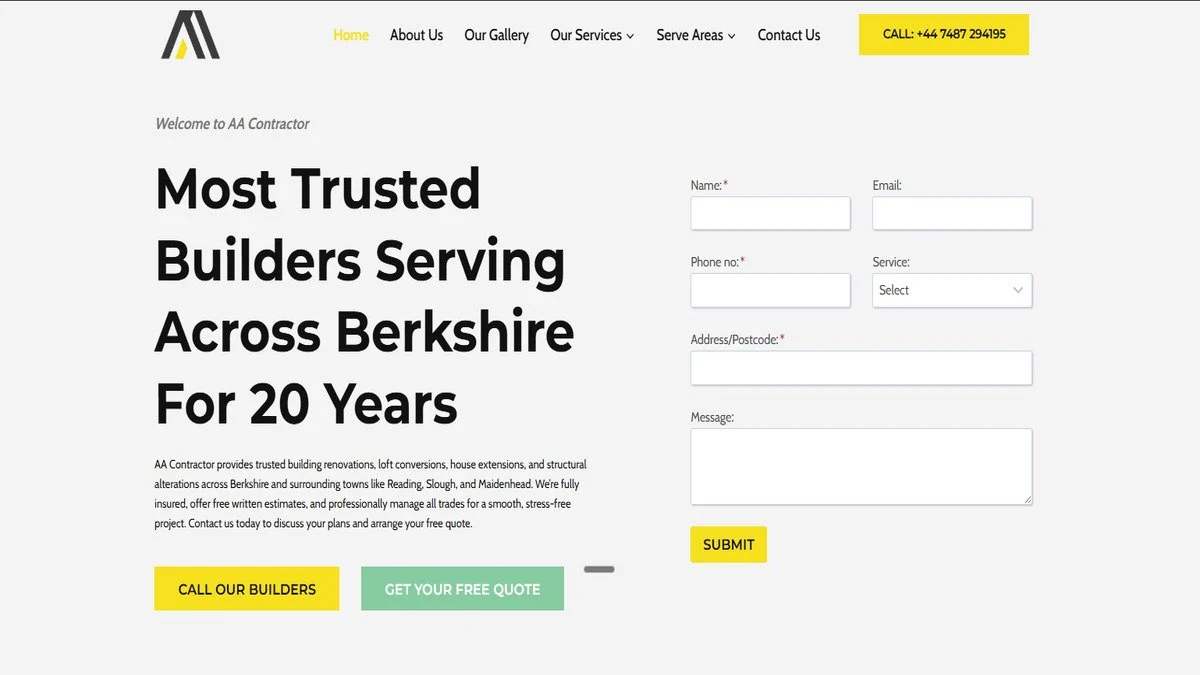
62% of homeowners review a builder’s website before requesting a quote, and more than half eliminate anyone whose site doesn’t clearly show real past projects and credibility signals. For a renovation company, that makes the portfolio the single most decisive section on the entire site — not a nice-to-have gallery at the bottom of the page, but the thing that actually gets you shortlisted or crossed off.
The Shift Toward Design-Build Changes What a Website Needs to Prove
2026 has brought a real shift in how homeowners approach renovation: rather than hiring an architect and a contractor separately and hoping the two stay aligned, more are actively looking for a single design-build team that takes responsibility for both the design intent and the physical build. If your website still reads like a general builder’s — a services list and a phone number — it doesn’t answer the question a lot of visitors are actually asking, which is whether one company can handle the whole project, start to finish.
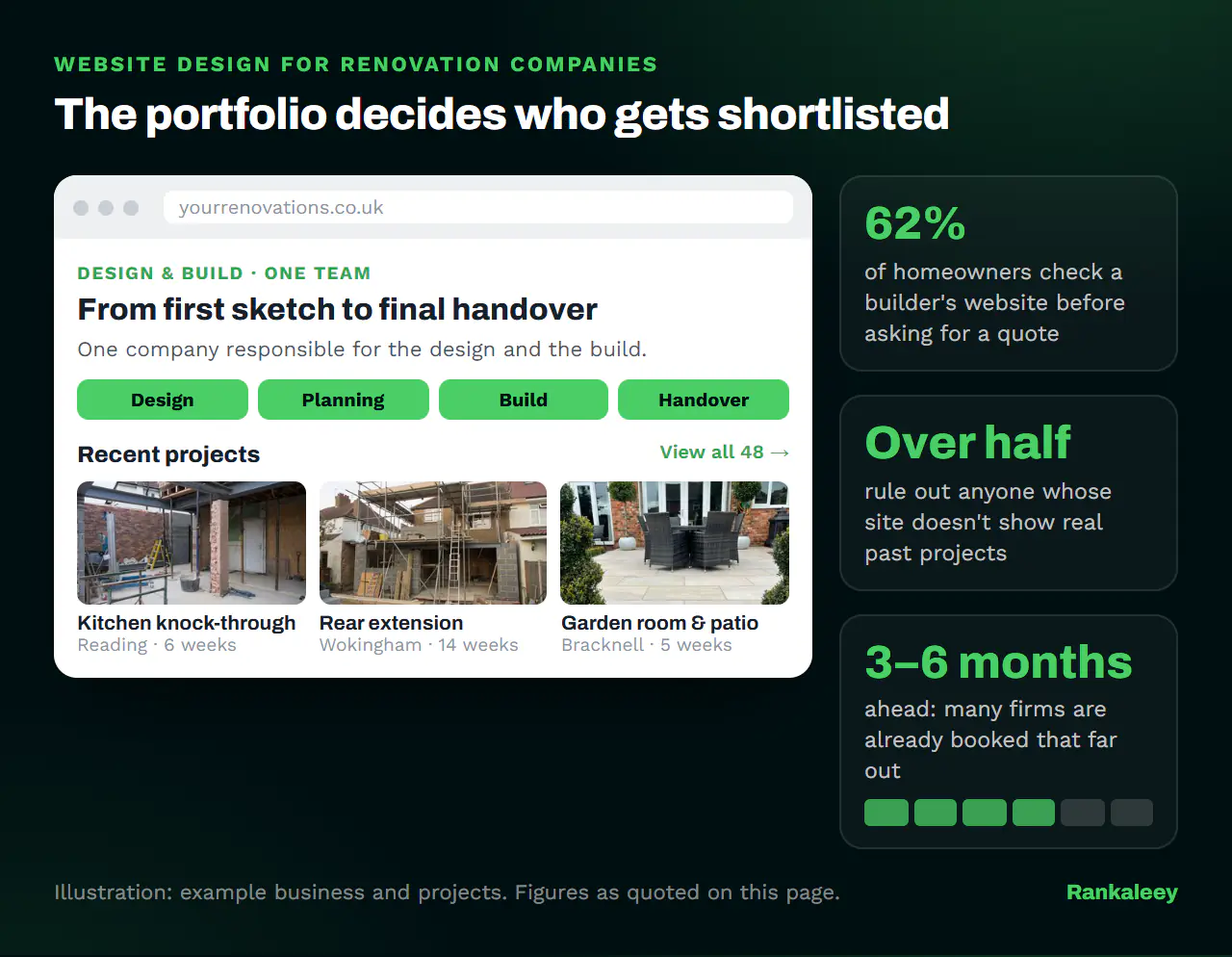
Almost 7 million UK homeowners plan to renovate by 2027, budgeting an average of £14,000 for a typical project — smaller jobs like a kitchen or bathroom refit usually run 2-6 weeks, a full-house renovation 16-28 weeks. Demand is currently outpacing supply enough that many renovation companies are booking 3-6 months out, which is its own kind of urgency: homeowners researching now are deciding who to book before the calendar fills up, not just who did good work last year.
The results below are from Rankaleey’s building and renovation clients directly — the closest match of any spoke page to our actual proof. Website Design for Builders covers the core local SEO system in more depth; this page focuses on what’s different when the sale hinges on a strong portfolio and a design-build pitch.