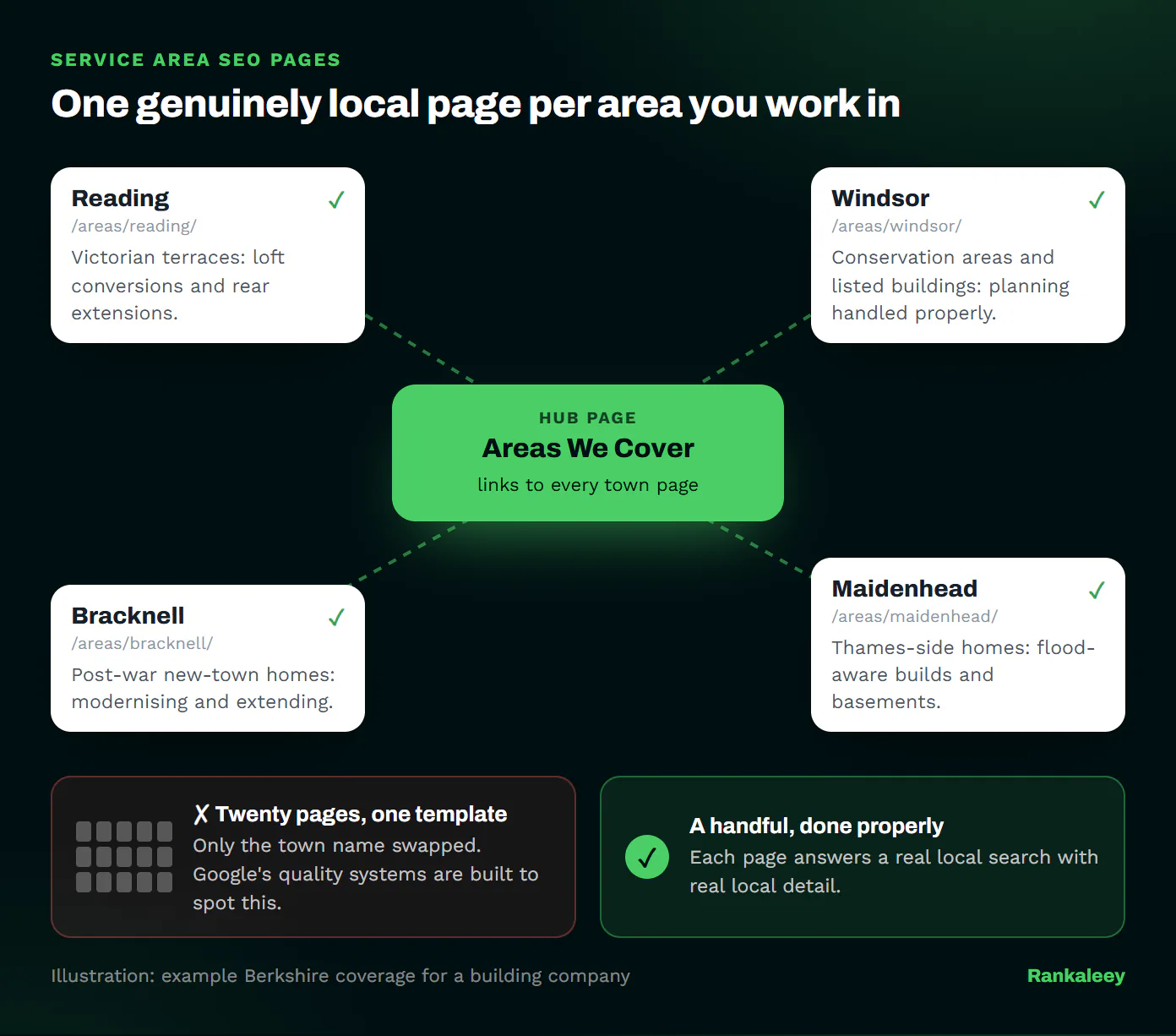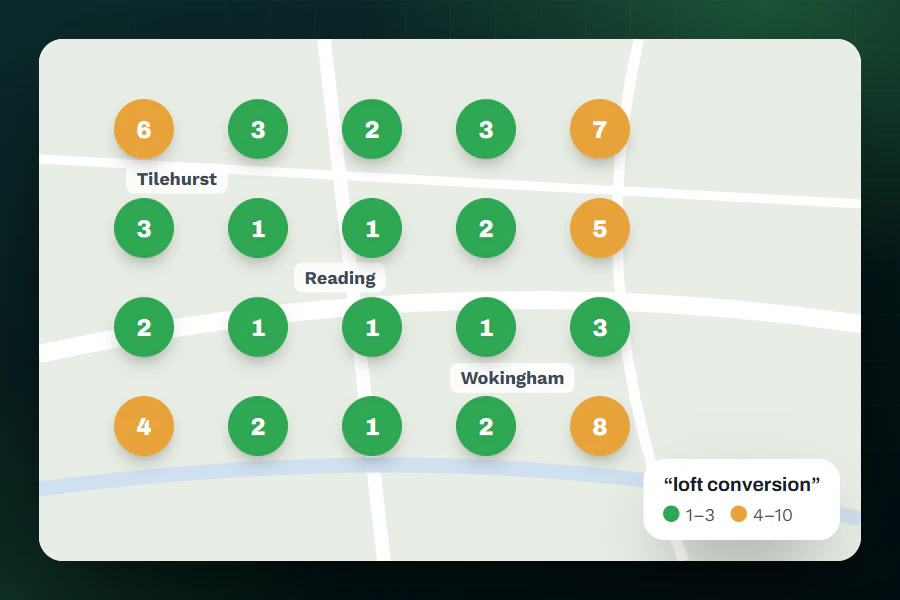
A service area page is a single page on your website, built and optimised for one specific town, city, or postcode you genuinely take jobs in — not a setting buried in your Google Business Profile, and not one page trying to rank for every place you’ve ever worked. If you cover Reading, Wokingham, and Bracknell, the right approach means three distinct pages, each written around the real work you do and the real questions a homeowner in that specific area is searching.
Why Most Agencies Get This Wrong
The most common mistake is producing a batch of near-identical pages with only the town name swapped — same paragraph structure, same generic claims, same stock photography, repeated across twenty towns. Google’s quality systems are specifically built to spot this pattern, and pages like it tend not to rank at all, however many of them exist. In some cases, a site full of thin, duplicated location pages can even hold back the pages that would otherwise be doing well.
That’s not a reason to avoid service area pages — it’s a reason to build fewer of them, properly. A handful of genuinely distinct, well-researched pages consistently outperforms dozens of templated ones, because each page is actually answering a real search rather than just existing to pad out a sitemap.