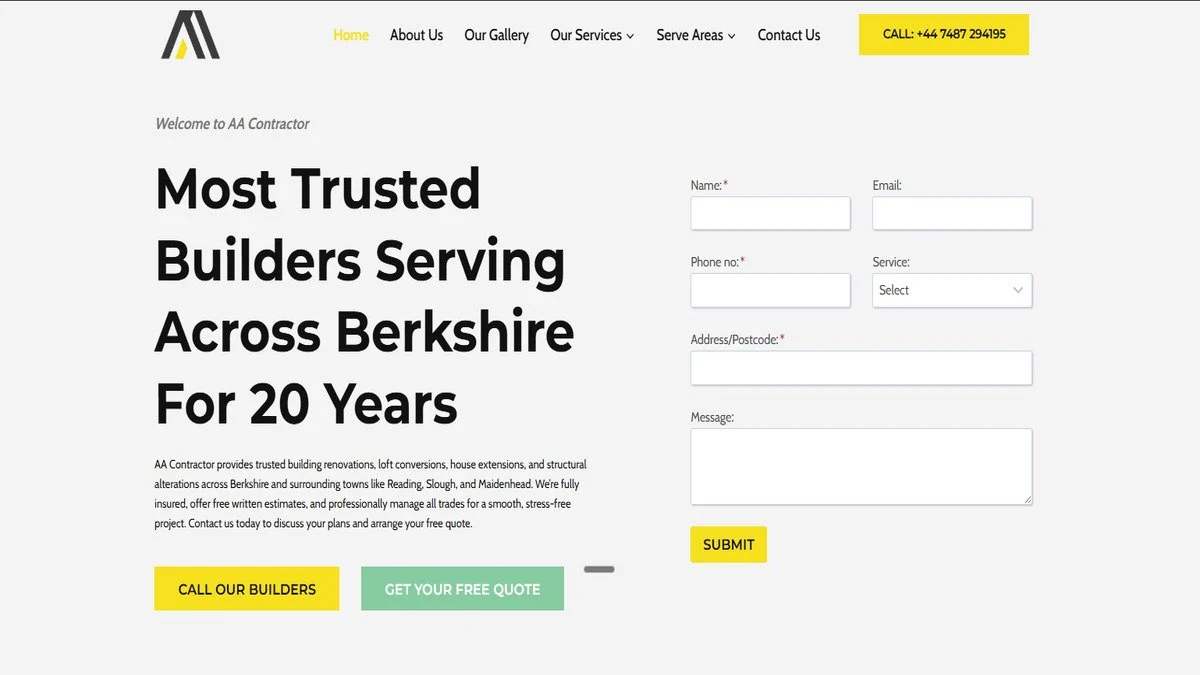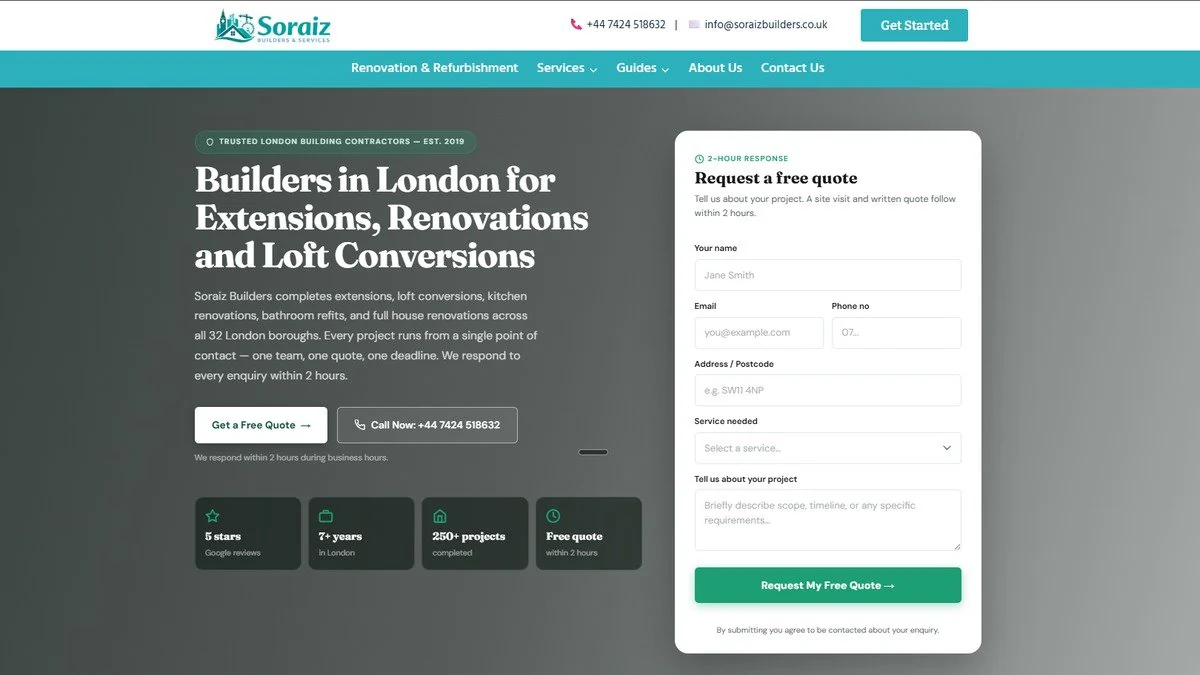
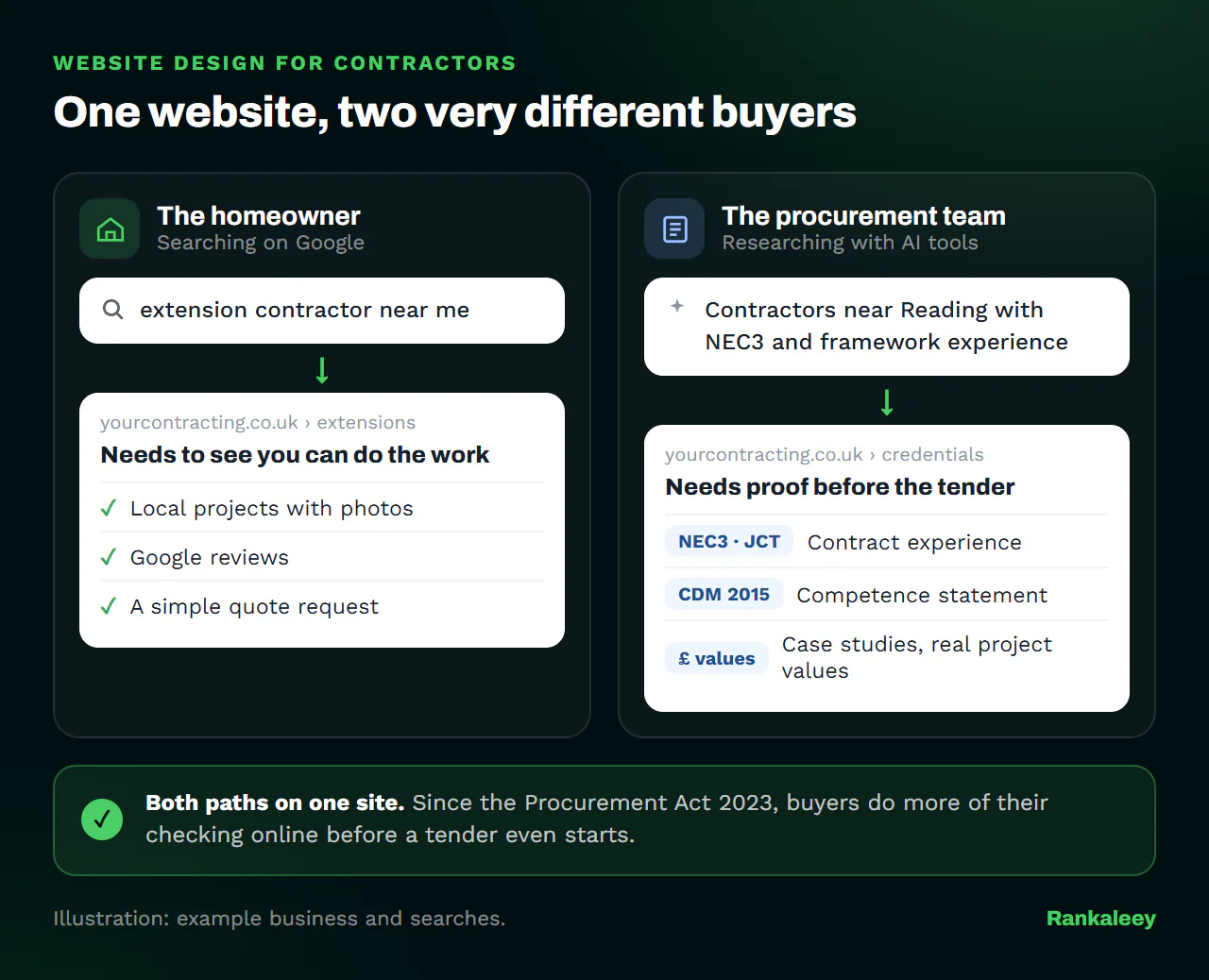
A general contractor’s website has to do a job a single-trade builder’s site doesn’t: convince two very different audiences at once. A homeowner searching for an extension wants to see you can do the work; a procurement officer checking your credentials before including you in a tender wants to see NEC3 or JCT contract experience, CDM 2015 competence, and framework agreement history — and increasingly, they’re starting that check using AI research tools, not just Google.
Why “Just a Website” Isn’t Enough for Contractors and Construction Companies
The core difference between a builder and a general contractor is scope: a builder is hands-on and limited in how much work they can take on at once, while a contractor coordinates multiple trades and subcontractors across bigger, more complex projects, carrying responsibility for the whole job start to finish. That difference has to show up on the website — not just in the copy, but in what proof is on offer: project values, framework experience, and the contract standards a commercial client actually checks for.
The Procurement Act 2023, live since February 2025, has put even more weight on financial robustness and risk-sharing in pre-qualification — meaning the businesses evaluating you are doing more homework online before a formal tender ever starts, not less. A generic “our services” page with no framework experience, no CDM competence statement, and no real project case studies doesn’t survive that scrutiny, however good the actual work is.
The results below are from Rankaleey’s building and renovation clients — the same local SEO system applies across UK trades, general contracting and construction companies included. Website Design for Builders covers the core system in more depth; this page focuses on what’s different when you’re coordinating multiple trades rather than working single-handed.