UK landscaping demand swings by a factor of five between December and April, roughly doubling between February and April alone as the core March-October trading season approaches. That means a landscaper’s website has a genuinely narrow window to actually work — a site that isn’t ready to convert by February is missing a huge share of the year’s bookings before the season has even properly started.
The Competitor You’re Actually Up Against Might Not Be Another Landscaper
More than half of UK homeowners do their own garden work rather than hiring a professional, driven partly by social media DIY tutorials and budget-conscious spending — with the average homeowner investing £865 on garden and outdoor projects in 2026. That’s a real, distinct challenge landscaping has that trades like electrical or plumbing work simply don’t: your website isn’t just competing with other landscapers, it’s competing with the idea of not hiring anyone at all.
BALI — the British Association of Landscape Industries — has represented and accredited the sector since 1972, with 900+ vetted members, and is exactly the kind of trust signal that answers the DIY question directly: showing a homeowner why a professional result is worth paying for. That accreditation, plus a portfolio that actually shows finished gardens rather than describing them, is what turns a browsing visitor into a booked job before the spring rush fills your calendar.
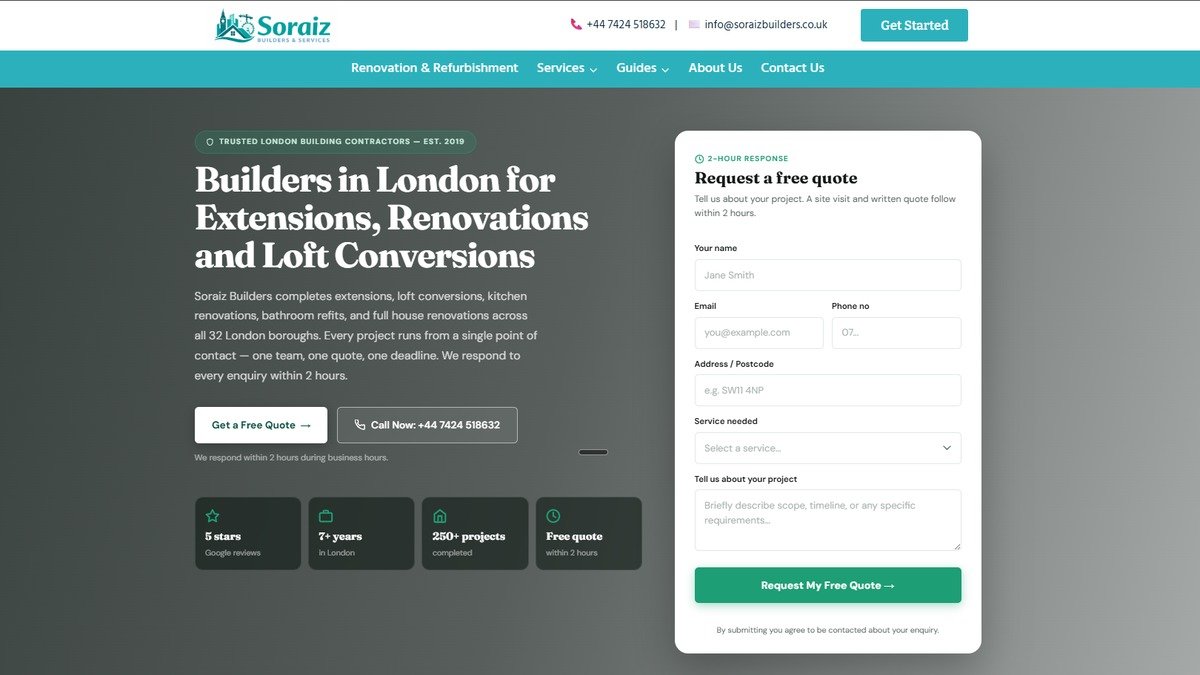
The results below are from Rankaleey’s building and renovation clients — the same local SEO system applies across UK trades, landscaping included. Website Design for Builders covers the core system in more depth; this page focuses on what’s different about a market this seasonal.